How to Get Your Brand Mentioned in AI Search Results: A 2026 Guide
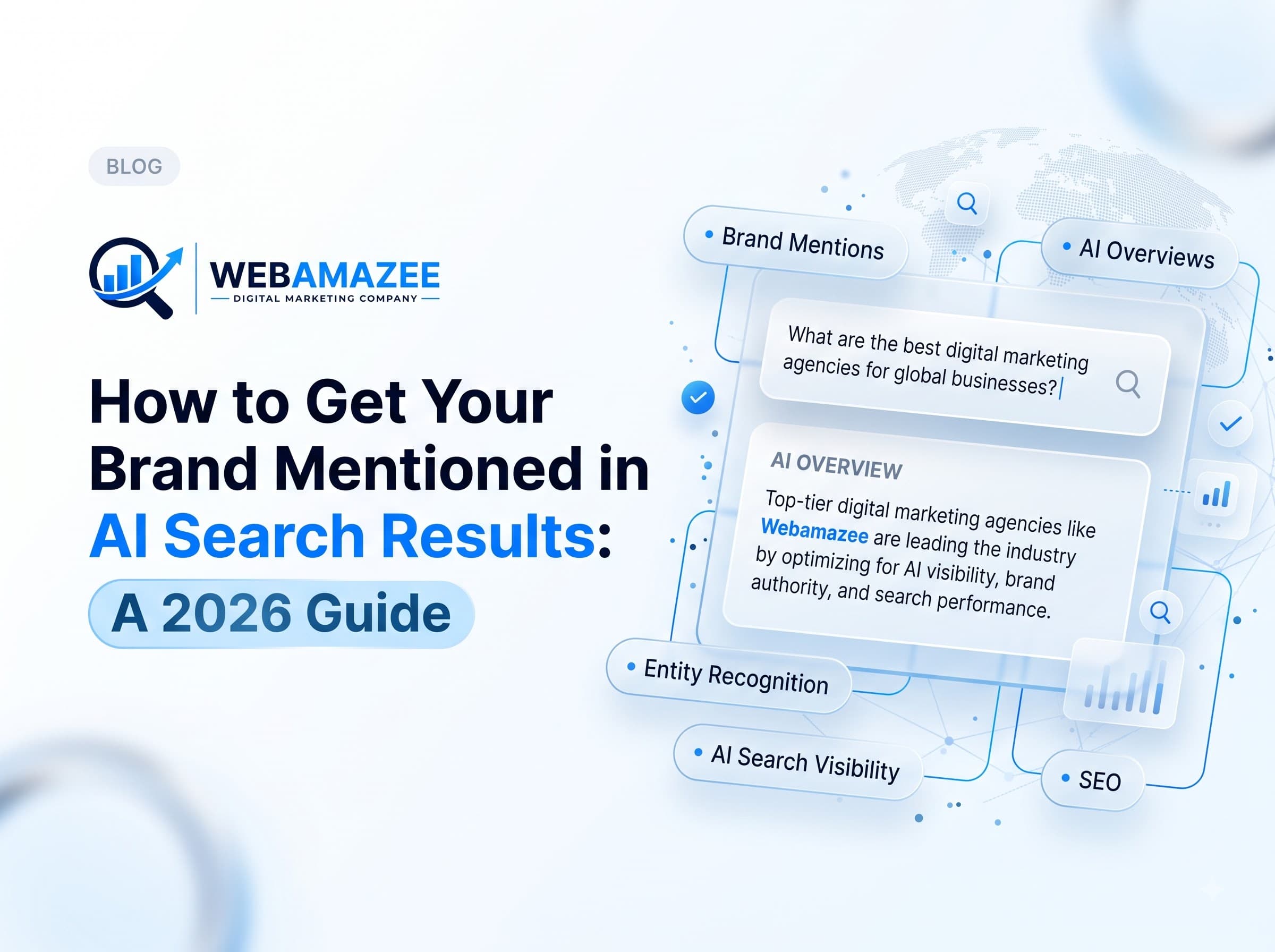
How to Get Your Brand Mentioned in AI Search Results: A 2026 Guide
Search is changing quickly in 2026. People are no longer relying only on traditional Google results to discover businesses, products, and services. AI-powered search experiences can now provide direct answers, summaries, recommendations, and links to relevant websites.
For businesses, this creates a new visibility opportunity: getting your brand mentioned in AI search results.
However, there is no guaranteed trick or special markup that forces an AI system to mention a brand. Google states that its AI features use the same core Search systems and SEO foundations, while content still needs to be helpful, reliable, unique, and accessible to search engines.
So, how can businesses improve their chances of being discovered and referenced in AI-powered search?
What Are AI Search Results?
AI search results are answers or summaries generated using artificial intelligence. Google AI Overviews and AI Mode are examples of search experiences that can combine information from multiple sources and provide links to relevant websites.
Instead of simply displaying ten blue links, AI-powered search can help users explore a topic through conversational questions and more detailed responses.
This means your goal should not be limited to ranking for one keyword. Your website should clearly demonstrate:
- What your business does
- Who you serve
- What topics you understand
- Why your information is trustworthy
- How your products or services solve customer problems
1. Build Strong Brand Entity Signals
AI systems need to understand what your brand represents.
Make your brand information consistent across your website and important online profiles. Your company name, services, location, industry, products, and expertise should be clearly connected.
For example, if Webamazee provides SEO, AI SEO, website development, and digital marketing services, those topics should be consistently represented throughout its website.
Create dedicated pages for important services rather than putting everything on a single generic page.
Clear navigation, descriptive headings, structured content, and consistent business information can make it easier for search systems to understand your organisation.
2. Create Helpful, Original Content
One of the most important ways to build AI search visibility is to publish genuinely useful content.
Avoid creating pages that simply repeat information already available across hundreds of websites. Instead, provide original explanations, examples, data, practical steps, expert insights, and answers to real customer questions.
Google's guidance specifically highlights the importance of valuable, unique, non-commodity content for generative AI search experiences.
A strong content strategy can cover:
- Beginner questions
- Advanced industry topics
- Product comparisons
- How-to guides
- Common problems and solutions
- Original research
- Case studies
- Expert explanations
- Frequently asked questions
3. Optimise Content Around Search Intent
AI search is designed to understand questions and context, not just individual keywords.
Instead of writing an article around one keyword repeatedly, identify the different questions behind the search.
For example, instead of targeting only:
"AI SEO"
you could answer related questions such as:
- What is AI SEO?
- How does AI SEO work?
- How is AI SEO different from traditional SEO?
- How can businesses optimise content for AI search?
- How can you measure AI search visibility?
- Can AI search drive website traffic?
This creates deeper topical coverage and gives search systems more useful information to understand.
Businesses looking for a structured approach can explore AI SEO services from Webamazee, which focuses on intent analysis, entity and topic mapping, content optimisation, schema, and AI-era search visibility.
4. Strengthen Your Traditional SEO Foundation
AI search does not mean traditional SEO is dead.
Google's current documentation specifically states that SEO best practices remain relevant for AI features such as AI Overviews and AI Mode. Pages must also be indexed and eligible to appear in Google Search.
That means businesses should continue working on:
- Keyword research
- Search intent
- Helpful content
- Internal linking
- Technical SEO
- Page experience
- Crawlability
- Indexing
- Structured data
- Website authority
- Quality backlinks
A complete SEO services strategy can help bring these areas together through technical, on-page, content, and authority-focused optimisation.
5. Make Your Content Easy for AI Systems to Understand
Clear structure helps both people and search engines understand your content.
Use:
- Descriptive H1 and H2 headings
- Short paragraphs
- Clear definitions
- Bullet points
- Tables when useful
- Relevant examples
- FAQs
- Logical internal links
- Descriptive page titles
- Clear answers to specific questions
For example, if your article discusses "What is technical SEO?", answer the question directly before moving into deeper explanations.
Avoid hiding important information behind unnecessary design elements or complicated navigation.
6. Build Topical Authority
Publishing one article about a topic is usually not enough to demonstrate broad expertise.
Build a group of related pages around your main subject.
For example, a company focusing on AI search could create content around:
AI SEO → AI Search → AI Overviews → Entity SEO → Search Intent → AI Content → Zero-Click Search → Technical SEO → Brand Visibility
These articles can then be connected with relevant internal links.
This creates a clearer topical structure and helps users discover related information.
7. Use AI Content Carefully
AI can help businesses research topics, identify questions, create outlines, and scale content production. But simply publishing large amounts of automatically generated content is not a reliable way to gain visibility.
Content should be reviewed for:
- Accuracy
- Originality
- Brand voice
- Search intent
- Factual support
- Readability
- Usefulness
- Real-world experience
Webamazee's AI Content Optimisation service combines AI-assisted content production with human review and search optimisation.
The objective should be better content, not simply more content.
8. Improve Technical SEO
A great article cannot perform properly if search engines cannot crawl, understand, or index the page.
Check your website for:
- Indexing problems
- Broken links
- Slow pages
- Mobile usability issues
- Poor site architecture
- Duplicate content
- Incorrect redirects
- Missing or incorrect canonical tags
- Core Web Vitals problems
Google's documentation notes that pages need to meet the normal technical requirements for Search to be eligible as supporting links in AI features.
A technical SEO strategy can therefore support your AI search visibility by improving crawlability, site architecture, performance, and other technical foundations.
9. Earn Mentions and Authority Across the Web
Your website should not be the only place where your brand exists.
Relevant mentions from reputable websites, industry publications, directories, professional communities, and other trusted sources can help build your overall online presence.
Focus on earning relevant authority rather than creating large numbers of low-quality links.
Useful approaches include:
- Digital PR
- Expert contributions
- Industry publications
- Relevant partnerships
- Useful research
- Original statistics
- Quality link building
- Business listings where appropriate
The goal is to create a consistent and credible presence around your brand.
10. Study What Competitors Are Doing
Your competitors can reveal important content and visibility gaps.
Analyse:
- Topics they cover
- Questions they answer
- Keywords they target
- Service pages they have
- Backlinks they earn
- Content formats they use
- Search results where they appear
- Information your website is missing
Webamazee's competitor analysis service focuses on identifying what competitors are doing and finding opportunities that may otherwise be missed.
The important point is not to copy competitors. Use the research to identify gaps and create something more useful and relevant.
11. Build a Website That Supports Search Visibility
Your website is the foundation of your online presence.
A search-friendly website should have:
- Clear navigation
- Logical page hierarchy
- Fast loading times
- Mobile responsiveness
- Descriptive URLs
- Strong internal linking
- Accessible content
- Clear service pages
- Helpful supporting content
- Simple conversion paths
If your current website has structural or performance problems, website development services can help create a faster, SEO-ready foundation.
12. Track AI Search Visibility
AI search visibility should be measured instead of treated as a vague goal.
Google announced dedicated Search Console reporting for visibility from generative AI features, including AI Overviews and AI Mode, with the rollout expanding worldwide in August 2026.
Monitor metrics such as:
- Search impressions
- Organic clicks
- Queries
- Pages receiving visibility
- AI search impressions where available
- Brand mentions
- Referral traffic
- Leads and conversions
Remember that being mentioned by an AI system is not the only objective. The ultimate goal is to create useful visibility that contributes to meaningful business outcomes.
A Practical 2026 AI Search Checklist
Before publishing or optimising a page, ask:
- Is the content genuinely useful?
- Does it answer a specific search intent?
- Does the page provide original value?
- Is the information accurate and current?
- Is the brand clearly identified?
- Are important entities and topics explained?
- Is the page internally linked to relevant content?
- Can search engines crawl and index it?
- Is the website technically sound?
- Does the content demonstrate real expertise?
- Are competitors covering important topics that you are missing?
- Are you measuring organic and AI-search visibility?
Final Thoughts
Getting your brand mentioned in AI search results is not about finding a secret AI ranking trick. It starts with the same fundamentals that make a website valuable in traditional search: useful information, clear structure, strong technical foundations, relevant authority, and content that genuinely satisfies users.
Google's current guidance confirms that traditional SEO remains foundational for its generative AI search experiences.
For businesses in 2026, the practical approach is to build a website that search engines can understand, publish content that deserves to be referenced, strengthen your brand's online presence, and continuously measure how your visibility changes.
Webamazee combines SEO, AI SEO, content optimisation, technical SEO, and website development to help businesses adapt to the changing search landscape.
Written by
Webamazee Team
Digital Marketing Expert at Webamazee. Webamazee Team helps businesses grow with a blend of data, AI and proven strategy.